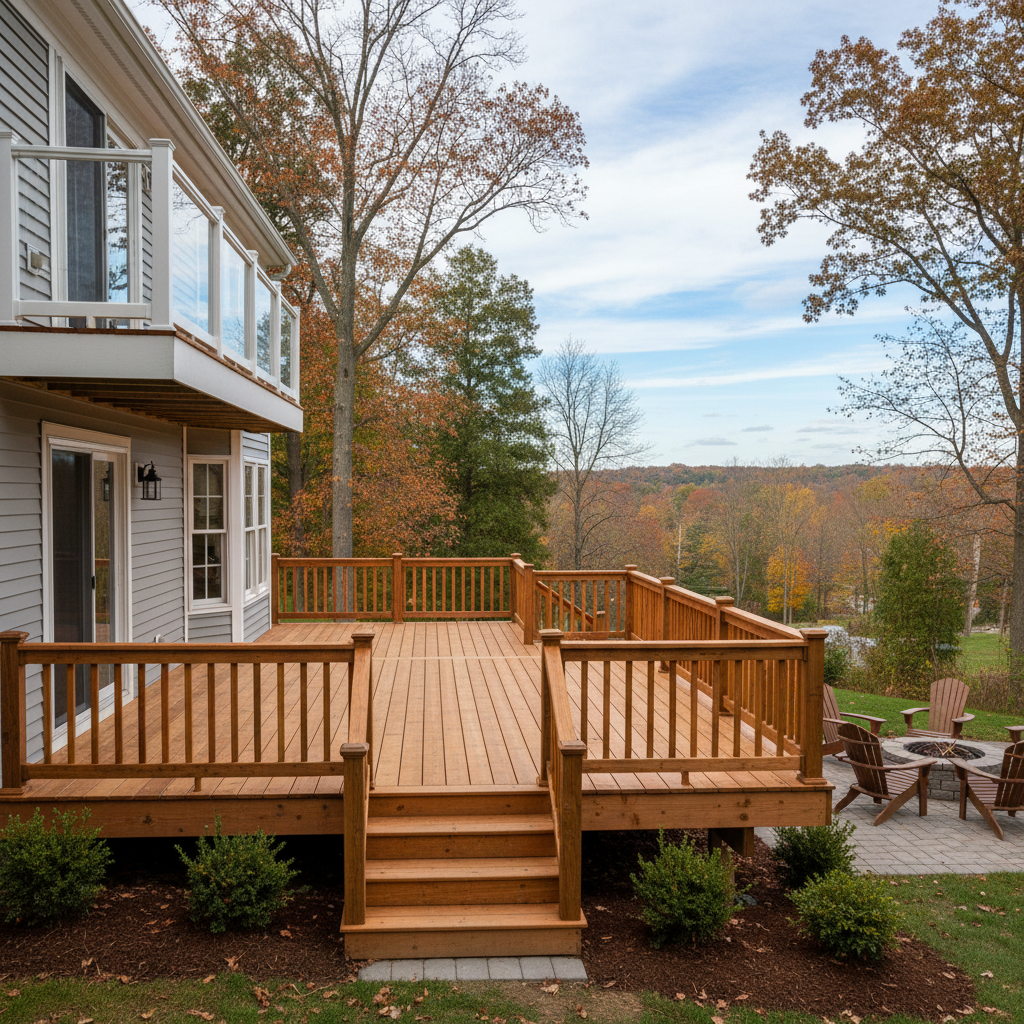
Ever notice how fast a wooden deck can go from looking sharp to looking tired around here? If you live anywhere from Copely Village up toward the Burlington line, you already know what our New England weather does to wood. We get slammed with heavy wet snow in January, soaking spring rains, and blazing summer humidity that bakes the boards. That constant shifting takes a real toll on your outdoor living space.
Western Decking spends a lot of time talking homeowners through the seasonal rhythm of deck care. If you wait until a problem stares you in the face, you are usually looking at a bigger repair bill than you bargained for.
Timing Your Staining and Sealing Work
You cannot just slap stain on a deck whenever you feel like it. The weather has to cooperate. Around Bristol, late spring or early fall usually gives us the sweet spot for temperature and humidity. You want daytime temps consistently between 60 and 80 degrees without the wood being roasted by direct July sunlight.
If the wood is holding moisture from an April downpour or morning frost, that sealer is not going to soak in right. It will just peel up by August. Give it a few dry days to breathe before you roll anything on.
Battling Winter and Spring Thaws
Winter in Hartford County means freeze-thaw cycles. Water gets down into tiny cracks in the grain, freezes overnight, expands, and splits your boards wide open. Shoveling snow off your deck with a metal edge is a surefire way to gouge the wood and strip whatever protection is left on the surface. Use a plastic shovel, or better yet, just leave a thin layer of snow if you can manage it.
When the snow finally melts off in March, do not ignore the green algae and grime that builds up in the shady spots near the tree line. A gentle wash goes a long way before the pollen starts dusting everything yellow.
Smart Maintenance Checklist
Keeping ahead of the elements does not have to eat up your whole weekend. Just keep these basics in mind:
- Check your ledger board and flashing every spring after the snow loads melt off.
- Tap down any popping nails or drive in loose screws before someone catches a toe on them.
- Wash off heavy organic debris like wet oak leaves before they stain the grain permanently.
Taking care of your deck seasonally means you will spend more time actually enjoying it and less time stressing over rotting wood. A little preventative work each season keeps your backyard setup solid for years to come.