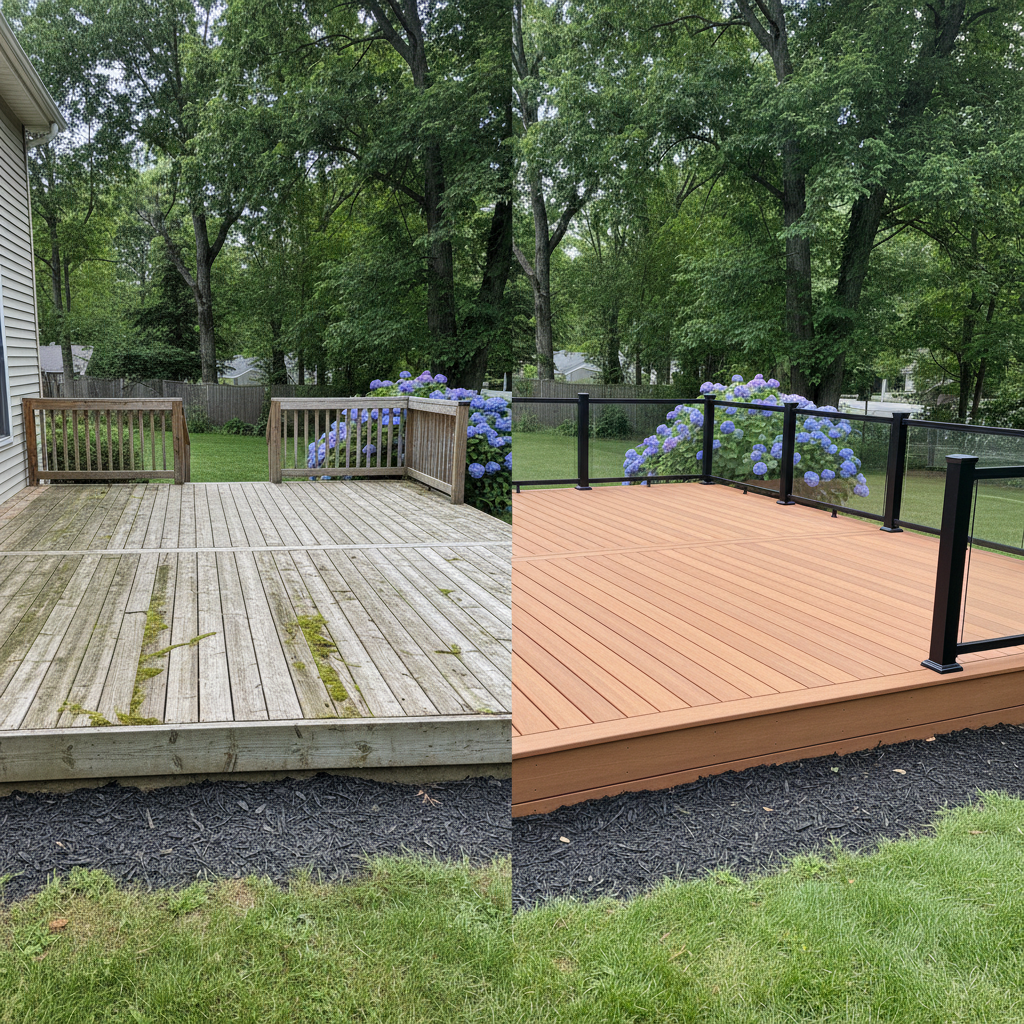
So, you're thinking about a new deck, and you're set on wood. Good call! Nothing quite beats the natural look and feel of a wooden deck, does it? But when it comes to wood, you've actually got a couple of options. For most folks here in Bristol, the two big players are pressure-treated pine and cedar.
People ask me all the time, "Which one's better?" Honestly, there isn't a single "better" choice; it really just depends on what you're looking for. Let's break down the good and bad of each, so you can make a smart decision for your own backyard haven.
Pressure-Treated Pine: The Workhorse
Pressure-treated pine (PTP) is probably what pops into most people's heads when they hear "wooden deck." You see it everywhere, and there's a solid reason for that. It's usually southern yellow pine that's been chemically treated to fight off rot, decay, and those pesky insects. This treatment is a really big deal, especially with our damp springs and humid summers right here in Connecticut.
- Cost: This is where PTP really shines. It's way more affordable upfront than cedar. If you're on a tighter budget, or if you're dreaming of a big deck without draining your savings, PTP is definitely the way to go.
- Durability: This stuff is tough. The treatment makes it super resistant to the weather. You'll spot PTP decks all over Bristol that are over 20 years old and still holding strong, especially if someone's kept up with them. It can splinter a bit more easily than cedar over time if you ignore it, but it really stands up to heavy use.
- Maintenance: PTP needs regular upkeep, just like any wood deck. You'll want to give it a good cleaning every year and put on a quality stain and sealer every two or three years. This protects it from the sun's UV rays, stops it from turning gray, and helps prevent surface cracks. If you skip this, it'll still be structurally sound for ages, but it just won't look its best.
- Appearance: Fresh PTP usually has a greenish tint from the treatment. That fades to a honey brown and eventually turns gray if you leave it unstained. It's got a more rustic, less fancy look than cedar. You can stain it almost any color, though, to match your house.
Cedar: The Natural Beauty
Cedar, especially Western Red Cedar, is a premium pick. It naturally resists rot, decay, and insects because of its natural oils. It's a gorgeous wood, offering a totally different vibe and feel.
- Cost: Get ready to pay more for cedar — sometimes 50% to 100% more than PTP just for the lumber. It's an investment, no doubt about it.
- Durability: Cedar is naturally durable against the elements, but it's a softer wood than pine. That means it can dent and scratch more easily. It handles moisture well thanks to those natural oils, which is a huge plus for our New England weather.
- Maintenance: Like PTP, cedar needs an annual cleaning and regular sealing or staining to keep its color and protect its surface. If you let it go, it'll weather to a lovely silvery-gray patina, which some people actually prefer. Still, sealing it will make it last longer and stop surface checks.
- Appearance: This is where cedar really shines. It has a rich, warm reddish-brown color with a beautiful grain pattern. It smells fantastic when it's new, too. It offers a more refined, natural, and high-end look right from the start.
My Take for Bristol Homeowners
Look, for most folks in Bristol — especially if you're building a deck on a typical quarter-acre lot in a neighborhood like Forestville or West End — pressure-treated pine is probably the smartest choice. It's affordable, incredibly durable against our brutal winters and humid summers, and with proper care, it'll give you decades of enjoyment.
You can get a fantastic-looking PTP deck that stands up to kids, pets, and our crazy weather without breaking the bank. You can even stain it to get pretty close to a cedar look if that's what you're after.
Now, if you've got the budget and you're truly chasing that premium, natural aesthetic, cedar is absolutely gorgeous. It’s a statement. Just be ready for the higher initial cost and understand that while it's naturally resistant, it's a softer wood that might show wear a bit more quickly if it's in a high-traffic spot. For a smaller, more intimate deck or a specific architectural style, cedar can be perfect.
At Western Decking, we build with both, and we build them right. The most important thing, really, is that your deck is built to last, no matter the material. Give us a call, and we can chat through your specific project and help you figure out what's best for your home and your wallet.