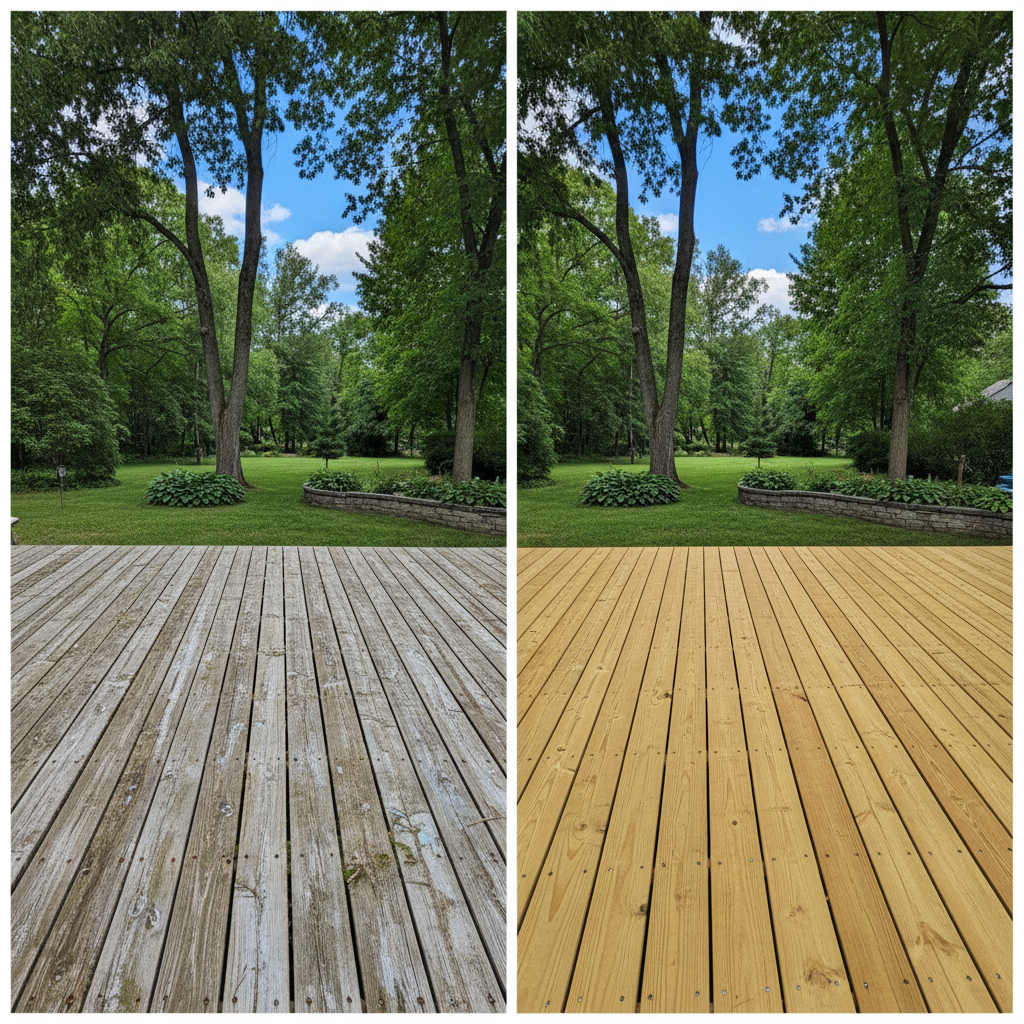
Your deck's seen a lot, hasn't it? Maybe it's hosted countless summer barbecues, weathered a dozen Bristol winters, and now a few boards are looking pretty rough. You've got a choice to make: do you just replace the worst offenders, or is it time for a more extensive partial rebuild? I see this dilemma all the time here in Bristol, especially with decks that are 10-15 years old.
Patching Up: The Quick Fix
Let's talk about patching first. This is where we identify specific rotten, cracked, or splintered boards and replace just those. It's often the first thing homeowners think of, and for good reason.
- Cost: This is usually the cheapest option upfront. You're only buying a few new boards, a handful of fasteners, and paying for less labor. If you're handy, you might even tackle it yourself.
- Durability: Here's where it gets tricky. If the rot is isolated to just a few surface boards, and the joists underneath are solid, a patch can hold up fine for a while. But if those bad boards are a symptom of a larger issue – say, inadequate drainage, or the wood's just past its prime – you might find yourself patching again next year. It's like putting a band-aid on a deeper wound.
- Maintenance: You'll still need to maintain the *entire* deck, including the new boards. That means cleaning, staining, or sealing. The new boards might take stain differently than the aged ones, which can lead to a slightly uneven look.
- Appearance: This is the biggest drawback for most folks. Even if you match the wood species, new boards rarely blend perfectly with old, weathered ones. You'll often see a checkerboard effect, especially before a fresh stain job. If your deck is particularly old, finding an exact match for the aged lumber can be tough.
I've done plenty of patch jobs. They're great for a deck that's otherwise in excellent shape but had one or two unfortunate incidents, like a potted plant that sat and rotted a spot, or a board that split badly. But if you're finding more than 10-15% of your deck surface needs replacing, or if the structural components are showing wear, patching becomes less appealing.
Partial Rebuild: A More Lasting Solution
A partial rebuild means we're replacing a larger section of the deck, or maybe even the entire decking surface, while keeping the existing, sound substructure (joists, beams, posts) intact. This is a common scenario for decks where the top boards have simply worn out, but the bones are still good.
- Cost: This is a bigger investment than patching, no doubt. You're buying a lot more material and paying for more labor. However, it's significantly less expensive than tearing down and building a brand new deck from scratch, because we're reusing the most expensive and labor-intensive part: the foundation.
- Durability: This is where you get the most bang for your buck. By replacing all the surface boards, you're essentially getting a brand new 'top half' of your deck. If we use quality materials and proper installation techniques, this new surface will last for many years, often as long as a brand new deck. We also get a chance to inspect and reinforce the substructure during the process.
- Maintenance: You're starting fresh. All the new boards will take stain or sealant uniformly, giving you a consistent finish. Your maintenance schedule resets, and you'll get years before needing major work again.
- Appearance: This is the biggest upside. Your deck will look brand new. No mismatched boards, no patchwork quilt effect. You can even choose to upgrade your decking material – maybe go from pressure-treated lumber to cedar, or even composite decking, if your substructure can handle the weight and spacing requirements. It's a complete aesthetic refresh.
Here in Bristol, with our freeze-thaw cycles and sometimes damp conditions, especially in older neighborhoods with mature trees like Forestville, I often recommend a partial rebuild if more than a quarter of the deck surface is compromised. It just makes more sense in the long run. You get a safer, better-looking, and more durable deck that will serve you well for another decade or two.
My Recommendation for Bristol Homeowners
If you've got just a couple of boards that are truly isolated problems, and the rest of your deck is solid, a patch job can certainly extend its life for a few more years. It's a budget-friendly way to keep things safe.
However, if you're looking at widespread rot, splintering, or if you're constantly finding new issues, a partial rebuild is almost always the better investment. You'll get a deck that looks great, performs like new, and requires less headache down the road. It's a smart way to get a 'new' deck without the full cost of starting from scratch.
Before you decide, let's get eyes on it. I can tell you pretty quickly if your deck's a candidate for a simple patch or if a partial rebuild is the smarter move for your home. Give Western Decking a call, and we'll figure out the best path forward for your outdoor space.